Showing posts with label grocery. Show all posts

Friday, July 15, 2011

WHAT'S YOUR BEEF?

AUTHOR'S NOTE - All of the premises presented in this series of posts are solely based on personal experience as a livestock producer and strictly as a cattleman (I have a basic understanding of farm commodities markets, but no real experience with such, and cannot speak with much authority from the farm side of things; Though I would think there are going to be some similarities). The information represents my opinion and is based on personal experiences. Any factual information may or may not be referenced, but be aware, the majority of the content is personal conjecture. Dialogue and comment are welcome.


“Don’t Sell the Steak—Sell the Sizzle!" (Elmer Wheeler; "Trusted Sentences that Sell", 1937)
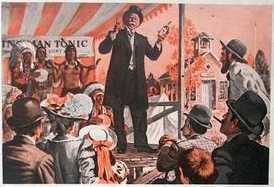


"Oh, the power of marketing". We have all heard that said, but, just what is Marketing? Well, the answer is based on who is being asked.


- Marketing is an organizational function and a set of processes for creating, communicating, and delivering value to customers and for managing customer relationships in ways that benefit the organization and its stakeholders.” (Small Business Branding)

- Marketing is based on thinking about the business in terms of customer needs and their satisfaction. (Business Dictionary)

I see the practice in very simple terms: Marketing is about exchanging value through the use of "half-truths".


EXAMPLE: "The" customer is health conscious and knows "whole grain" bread is better for them, so:
Marketing is a loaf of bread label that says "made with whole grains" and has the                   American Heart Association seal of approval. Sounds healthy, right(?)...until you read the ingredients and see it is made with high fructose corn syrup, dextrose, and a load of preservatives.


In essence, our food industry markets or advertises what the consumer wants to see or hear.  They "market" half of the truth....the whole truth is right there on the label as well...in "itty bitty" small print.


http://www.angus.org/

Which, brings me to the selling of beef and the marketing juggernaut known as "Certified Angus Beef" or CAB for short.

Now, traditionally, beef has been sold in steakhouses and supermarkets based on USDA grading (Prime, Choice, Select, etc.); however, many restaurants and retailers have recently begun advertising beef on the strength of brand names and the reputation of a specific breed of cattle.

The American Angus Association set up the "certified Angus Beef" brand in 1978. The goal of this brand is to promote the idea that Angus beef is of higher quality than beef from other breeds of cattle. Cattle that are at least 51% black and exhibit Angus-type characteristics are eligible for "Certified Angus Beef" evaluation.

Before the advent of the Certified Angus Beef brand, beef was just, well, beef. The commodity was bought and sold, based on grade with little, if any, preference to breed. Branding was the sole province of the Swift, Armour, and Stanko meatpacking companies.

The CAB concept was revolutionary and changed everything. The American Angus Association took their message straight to the consumer and then "partnered" with the meatpackers to create the image that angus beef actually tasted better than other breeds. Today, Certified Angus Beef is the world’s largest branded beef program, commanding an eye popping 60% market share.

THE HALF-TRUTH
Wow! When the consumer buys a package of beef with the CAB label, they are getting pure angus meat, right? Originally that was true, but today, certified angus beef comes from an animal that has just 1/8 angus in its bloodline or breeding. It doesnt come from pure bred angus cattle... just an animal that has angus somewhere in its breeding. If certified angus beef came from 100% angus cattle there would not be enough to supply the demand, thats why it comes from an animal that is known to have angus in its breeding. Clever, huh(!)?


THE TRUTH
In the United States, the USDA operates a voluntary beef grading program. The meat processor pays for a trained USDA meat grader to grade whole carcasses at the abattoir. The grades are based on two main criteria: the degree of marbling (intramuscular fat) in the beef rib eye (at the 12th rib cross-section), and the age of the animal prior to slaughter. Most beef offered for sale in supermarkets and most restaurants is graded choice or select. Less than 3% of all beef gets the highest grade of Prime beef and the majority of that is sold to exclusive hotels and upscale restaurants.

The USDA Grade Inspector Does Not take into consideration what breed of cattle they are inspecting. In fact, they rarely know which breed they are grading!

So, kudos to the Angus Beef folks...masterful job of Selling the Sizzle! And, in all fairness, they do provide a quality product...but, so do the producers of non-Angus breeds.

POP QUIZ:

These two Ribeye Steaks are of equal grade...Can you tell which one is Certified Angus Beef? (Look closely for a clue in one of the pics)


FYI: USDA BEEF GRADES
USDA Prime — highest in intramuscular fat. (Currently, only three percent of the steaks sold are USDA certified Prime.)
Choice
Select — the leanest grade commonly sold
Standard
Commercial
Utility
Cutter
Canner
**Ground Beef is not Graded**


Sign That the Apocalypse is Upon Us:
The "Big Three" national hamburger chains, notorious buyers of the lowest quality beef, are now promoting (marketing) the addition of Angus Beef Hamburgers to their menus.


Monday, July 4, 2011

The WACKY WORLD OF CATTLE and COMMODITY PRICES


AUTHOR'S NOTE - All of the premises presented in this series of posts are solely based on personal experience as a livestock producer and strictly as a cattleman (I have a basic understanding of farm commodities markets, but no real experience with such, and cannot speak with much authority from the farm side of things; Though I would think there are going to be some similarities). The information represents my opinion and is based on personal experiences. Any factual information may or may not be referenced, but be aware, the majority of the content is personal conjecture. Dialogue and comment are welcome.


Well...several months of research and data down the drain! 


Here I was, all set to show you how the retail price to the customer was going to sky rocket this summer, how the price of corn and feed grains were too high for cattle producers to profit and, in general complain about how the cattle producer was being squeezed. 


Then, last week (June 30, to be exact), The USDA released "The Crop Report". 


Let me set this up...
In a nutshell, I was going to show:


1. Based on the late spring flooding of hundreds of thousands of acres of corn through the Midwest to Arkansas and Louisiana, the persistent cool weather and rains across the farm belt that have delayed annual plantings, and the devastating effects of storms and tornados across the mid-section of our country as well as through the South would drive the prices of corn and grains to all time highs. 


2. Because these commodities were the back bone of "grain fed" beef, the price of consumer prices for beef would rise, while the cattle producer would struggle to make a profit DUE to the higher costs associated with feeding cattle grain. 


AND, I was right (ever so briefly) ...corn and soybean prices were soaring and cattle producers, who are currently reaping very high prices for their cattle, were having their profit squeezed by the high cost of feeding corn...


Which brings me back to "The Crop Report"......


Turns out, the expected 2011 corn harvest will be much higher than expected and the harvest of other important food grains are also going to be well above average......This caused both corn and soybeans to back off of their "highs" by more than 10%. Grain commodities will continue to trend down over the next few weeks to very manageable cost levels for the beef industry.

GRAINS-U.S. corn extends losses after USDA report
                                                                                        Reuters News Service


So, what we have, currently, is the most rare of events in the cattle markets. The producer is actually receiving record prices for cattle while also enjoying "cheap feed"!! In other words, cattle producers are in a position to maximize profits not only through "lower input costs", but also while receiving historically high prices for their livestock.

"
Compared to last week’s sharply higher market, yearling feeder cattle 
continued their momentum and sold firm to 5.00 higher.  Steer and heifer calf 
demand improved on the heels of last week’s gains and traded from steady to 
6.00 higher with instances as much as 10.00 higher.  The most impressive 
signal of this week’s higher trade was the fact that it took place on fairly 
heavy receipts for this time of year with no help from the CME futures or fed 
cattle trade until the tail-end of the week." - USDA CATTLE AUCTION REPORT, JULY 1, 2011


Meanwhile, consumer prices for retail beef are still going up due to the inverse relationship with the above financial factors...the record high prices paid to producers are being "passed along" to the consumer.


"...higher corn costs—all higher costs—ultimately wend their way through the system and wind up in the retail price of the product..."  Burt Rutherford, Senior Editor, Beef Magazine