Showing posts with label cattle marketing. Show all posts

Friday, July 15, 2011

WHAT'S YOUR BEEF?

AUTHOR'S NOTE - All of the premises presented in this series of posts are solely based on personal experience as a livestock producer and strictly as a cattleman (I have a basic understanding of farm commodities markets, but no real experience with such, and cannot speak with much authority from the farm side of things; Though I would think there are going to be some similarities). The information represents my opinion and is based on personal experiences. Any factual information may or may not be referenced, but be aware, the majority of the content is personal conjecture. Dialogue and comment are welcome.


“Don’t Sell the Steak—Sell the Sizzle!" (Elmer Wheeler; "Trusted Sentences that Sell", 1937)
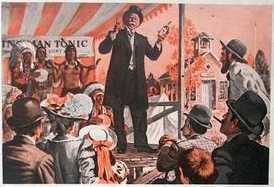


"Oh, the power of marketing". We have all heard that said, but, just what is Marketing? Well, the answer is based on who is being asked.


- Marketing is an organizational function and a set of processes for creating, communicating, and delivering value to customers and for managing customer relationships in ways that benefit the organization and its stakeholders.” (Small Business Branding)

- Marketing is based on thinking about the business in terms of customer needs and their satisfaction. (Business Dictionary)

I see the practice in very simple terms: Marketing is about exchanging value through the use of "half-truths".


EXAMPLE: "The" customer is health conscious and knows "whole grain" bread is better for them, so:
Marketing is a loaf of bread label that says "made with whole grains" and has the                   American Heart Association seal of approval. Sounds healthy, right(?)...until you read the ingredients and see it is made with high fructose corn syrup, dextrose, and a load of preservatives.


In essence, our food industry markets or advertises what the consumer wants to see or hear.  They "market" half of the truth....the whole truth is right there on the label as well...in "itty bitty" small print.


http://www.angus.org/

Which, brings me to the selling of beef and the marketing juggernaut known as "Certified Angus Beef" or CAB for short.

Now, traditionally, beef has been sold in steakhouses and supermarkets based on USDA grading (Prime, Choice, Select, etc.); however, many restaurants and retailers have recently begun advertising beef on the strength of brand names and the reputation of a specific breed of cattle.

The American Angus Association set up the "certified Angus Beef" brand in 1978. The goal of this brand is to promote the idea that Angus beef is of higher quality than beef from other breeds of cattle. Cattle that are at least 51% black and exhibit Angus-type characteristics are eligible for "Certified Angus Beef" evaluation.

Before the advent of the Certified Angus Beef brand, beef was just, well, beef. The commodity was bought and sold, based on grade with little, if any, preference to breed. Branding was the sole province of the Swift, Armour, and Stanko meatpacking companies.

The CAB concept was revolutionary and changed everything. The American Angus Association took their message straight to the consumer and then "partnered" with the meatpackers to create the image that angus beef actually tasted better than other breeds. Today, Certified Angus Beef is the world’s largest branded beef program, commanding an eye popping 60% market share.

THE HALF-TRUTH
Wow! When the consumer buys a package of beef with the CAB label, they are getting pure angus meat, right? Originally that was true, but today, certified angus beef comes from an animal that has just 1/8 angus in its bloodline or breeding. It doesnt come from pure bred angus cattle... just an animal that has angus somewhere in its breeding. If certified angus beef came from 100% angus cattle there would not be enough to supply the demand, thats why it comes from an animal that is known to have angus in its breeding. Clever, huh(!)?


THE TRUTH
In the United States, the USDA operates a voluntary beef grading program. The meat processor pays for a trained USDA meat grader to grade whole carcasses at the abattoir. The grades are based on two main criteria: the degree of marbling (intramuscular fat) in the beef rib eye (at the 12th rib cross-section), and the age of the animal prior to slaughter. Most beef offered for sale in supermarkets and most restaurants is graded choice or select. Less than 3% of all beef gets the highest grade of Prime beef and the majority of that is sold to exclusive hotels and upscale restaurants.

The USDA Grade Inspector Does Not take into consideration what breed of cattle they are inspecting. In fact, they rarely know which breed they are grading!

So, kudos to the Angus Beef folks...masterful job of Selling the Sizzle! And, in all fairness, they do provide a quality product...but, so do the producers of non-Angus breeds.

POP QUIZ:

These two Ribeye Steaks are of equal grade...Can you tell which one is Certified Angus Beef? (Look closely for a clue in one of the pics)


FYI: USDA BEEF GRADES
USDA Prime — highest in intramuscular fat. (Currently, only three percent of the steaks sold are USDA certified Prime.)
Choice
Select — the leanest grade commonly sold
Standard
Commercial
Utility
Cutter
Canner
**Ground Beef is not Graded**


Sign That the Apocalypse is Upon Us:
The "Big Three" national hamburger chains, notorious buyers of the lowest quality beef, are now promoting (marketing) the addition of Angus Beef Hamburgers to their menus.


Wednesday, July 6, 2011

TEXAS DROUGHT THREATENS NATIONAL BEEF SUPPLY

AUTHOR'S NOTE - All of the premises presented in this series of posts are solely based on personal experience as a livestock producer and strictly as a cattleman (I have a basic understanding of farm commodities markets, but no real experience with such, and cannot speak with much authority from the farm side of things; Though I would think there are going to be some similarities). The information represents my opinion and is based on personal experiences. Any factual information may or may not be referenced, but be aware, the majority of the content is personal conjecture. Dialogue and comment are welcome.


Beef is the No.1 selling protein in the United States. Last year, consumer spending on beef totaled $74.3 billion. Per capita consumption of beef in 2010 was 59.6 pounds while per capita spending for beef was $240, according to industry research firm CattleFax.

 In the state that gave birth to the cowboy and spawned the culture of cattle drives, modern-day ranchers are fighting for survival. Severe drought (the worst in 44 years) and several million charred acres from wildfires have delivered a devastating "gut" punch, forcing ranchers to take drastic measures to save ranches across Texas. The state's livestock industry has lost $1.2 billion under withering conditions, according to the Texas Agrilife Extension Service, a service branch of Texas A&M University.

In Texas and other states with large cattle herds, the beef supply chain starts at the ranch. Ranchers own a herd of beef cows, each of which gives birth to a calf once a year. The mother nurses the calf and the pair graze on grass through the summer and into the fall, whereupon the fattened calf is sent to market.
This year, ranchers should be reaping the benefits of high prices, low supplies and high demand for their beef. The demand for calves from feedlots, where cattle add hundreds of pounds before slaughter, seems insatiable. Without rangelands full of nutritional forage, cows will struggle for nutrients. The herd will lose interest in breeding and cows may not provide enough milk for their calves, bringing the critical first step of America's beef cycle to a halt.

Among all meat production, beef producers typically incur some of the highest production costs. For example, costs for raising cattle are much higher than for poultry farming. Cattle producers pay more for each animal, grazing lands, fertilizers, feed and processing systems versus poultry farmers. Also the time it takes to prepare cattle for sale is much longer compared to other meats. It takes just 46 days for chicken to be market ready, but can take up to two years for beef.

Exacerbating the situation further is the shrinking number of cattle available for consumption. As beef producers struggle with the escalating drought, rising business costs, and mounting debt, more of them are selling their heifers for meat production, instead of breeding them to expand the herd. In Texas, the largest producer of cattle in the U.S., the "state herd" is down nearly 18% since 2008. In fact, ranchers and farmers across the country are shrinking their herd sizes bringing the nation's cattle herd count to it's lowest since 1958.


ADDING SALT TO THE WOUND:

The outlook for more rain looks grim. The National Weather Service's Climate Prediction Center forecast below-normal rainfall for Texas over the next month at least.


Monday, July 4, 2011

The WACKY WORLD OF CATTLE and COMMODITY PRICES


AUTHOR'S NOTE - All of the premises presented in this series of posts are solely based on personal experience as a livestock producer and strictly as a cattleman (I have a basic understanding of farm commodities markets, but no real experience with such, and cannot speak with much authority from the farm side of things; Though I would think there are going to be some similarities). The information represents my opinion and is based on personal experiences. Any factual information may or may not be referenced, but be aware, the majority of the content is personal conjecture. Dialogue and comment are welcome.


Well...several months of research and data down the drain! 


Here I was, all set to show you how the retail price to the customer was going to sky rocket this summer, how the price of corn and feed grains were too high for cattle producers to profit and, in general complain about how the cattle producer was being squeezed. 


Then, last week (June 30, to be exact), The USDA released "The Crop Report". 


Let me set this up...
In a nutshell, I was going to show:


1. Based on the late spring flooding of hundreds of thousands of acres of corn through the Midwest to Arkansas and Louisiana, the persistent cool weather and rains across the farm belt that have delayed annual plantings, and the devastating effects of storms and tornados across the mid-section of our country as well as through the South would drive the prices of corn and grains to all time highs. 


2. Because these commodities were the back bone of "grain fed" beef, the price of consumer prices for beef would rise, while the cattle producer would struggle to make a profit DUE to the higher costs associated with feeding cattle grain. 


AND, I was right (ever so briefly) ...corn and soybean prices were soaring and cattle producers, who are currently reaping very high prices for their cattle, were having their profit squeezed by the high cost of feeding corn...


Which brings me back to "The Crop Report"......


Turns out, the expected 2011 corn harvest will be much higher than expected and the harvest of other important food grains are also going to be well above average......This caused both corn and soybeans to back off of their "highs" by more than 10%. Grain commodities will continue to trend down over the next few weeks to very manageable cost levels for the beef industry.

GRAINS-U.S. corn extends losses after USDA report
                                                                                        Reuters News Service


So, what we have, currently, is the most rare of events in the cattle markets. The producer is actually receiving record prices for cattle while also enjoying "cheap feed"!! In other words, cattle producers are in a position to maximize profits not only through "lower input costs", but also while receiving historically high prices for their livestock.

"
Compared to last week’s sharply higher market, yearling feeder cattle 
continued their momentum and sold firm to 5.00 higher.  Steer and heifer calf 
demand improved on the heels of last week’s gains and traded from steady to 
6.00 higher with instances as much as 10.00 higher.  The most impressive 
signal of this week’s higher trade was the fact that it took place on fairly 
heavy receipts for this time of year with no help from the CME futures or fed 
cattle trade until the tail-end of the week." - USDA CATTLE AUCTION REPORT, JULY 1, 2011


Meanwhile, consumer prices for retail beef are still going up due to the inverse relationship with the above financial factors...the record high prices paid to producers are being "passed along" to the consumer.


"...higher corn costs—all higher costs—ultimately wend their way through the system and wind up in the retail price of the product..."  Burt Rutherford, Senior Editor, Beef Magazine


Tuesday, February 22, 2011

ICE and HARD FREEZES in CENTRAL TEXAS...

We are still making repairs and catching up from the January and February ice and sub-freezing days. I hope to start posting very soon...

In the meantime, here is another post card from the ranch :)

HAPPY HOUR! 
This is "Blue" a pure bred Brahma Bull who is spending the winter with us. He does enjoy a beer now and then. Just to give you some perspective...I am 6ft 6in tall, Blue is 6ft 1in!

Sunday, February 14, 2010

UNDERSTANDING CATTLE MARKETING


PART 1 of The Series: A LIVING WAGE FROM COMMERCIAL CATTLE
AUTHOR'S NOTE - All of the premises presented in this series of posts are solely based on personal experience as a livestock producer and strictly as a cattleman (I have a basic understanding of farm commodities markets, but no real experience with such, and cannot speak with much authority from the farm side of things; Though I would think there are going to be some similarities). The information represents my opinion and is based on personal experiences. Any factual information may or may not be referenced, but be aware, the majority of the content is personal conjecture. Dialogue and comment are welcome.

 "A cattle auction is a place where honorable men try to swindle each other out of their herd." (an observation from my late Grandfather, who was an agricultural commodities buyer)


 An Introduction to the Various Methods for Selling Cattle

The marketing of livestock in the United States is conducted by a variety of businesses and individuals. The participants range from the order buyer who operates out of the seat of a pickup truck, cattle "buying stations" or "auction barns", and now video auctions that sell cattle via satellite television. The livestock marketing business has changed dramatically from the days when stock producers would send their livestock to a terminal market and totally blind of the price they might receive for their stock. Terminal markets and commission agents are still major players, but they now compete with modern day merchants who use computers, video broadcasts, fax machines, and cellular phones to market livestock. The current participants involved in the wholesale marketing of cattle include such diverse operations as feedlots, auction barns, order buyers, dealers, brokers, and video auction companies.

TERMINAL MARKETS and COMMISSION AGENTS

The term "Terminal Market" comes from the days when cattle were taken to the nearest train stop, or terminal, via trail drives and later by truck. Terminal markets usually provided a large area of livestock pens, also known as stockyards. The large meat packing firms would have buyers present to purchase the "meat on the hoof" and then arrange to ship the animals by train to the packing plants located in large metropolitan areas "back east."

 The use of commission agents dates back to the early days of trail drives when ranchers would send their livestock to an agent located at any of the larger stockyards, such as those located in  Chicago, Kansas City, and Fort Worth. These agents would then be responsible for the care and feeding of the livestock and the selling of them once they reached the yard. The agent was paid a commission, by the cattleman, based on how much the animals brought at market.

The Auction Barn
Livestock are consigned to auctions by ranchers, to be sold by an auctioneer. Because transprtation is a major expense, most often the producer will send their livestock to the nearest auction market. These auction markets are usually individually owned, though a few are owned by large food conglomerates. The owner of the auction receives a commission or a per head fee for selling the livestock in addition to charging for the feed consumed while the livestock are in the auction yard. 

In an auction livestock are typically sold by the pound except in the case of animals being sold strictly for breeding. Breed stock are usually sold by the individual head. For example, a breeding bull may bring as much as $2500 or more, whereas a steer destined for the feedlot is sold by weight "on the hoof". Simply put, a buyer  purchases the animal by the pound.

Sitting in the auction arena are the" buyers". They make their living attending  auction sales throughout the week. They may be order buyers working for  a single rancher or a buying syndicate, or they may be employees of a feedlot or a packing house. Order buyers are very knowledgeable and highly skilled at what they do. They are paid on a commission basis, and are responsible for purchasing hundreds (sometimes thousands) of head of cattle each week.


CUSTOM FEEDERS
A growing trend in the beef business in the last 30 years is the custom feeding of cattle. This means that a rancher contracts to have his cattle placed in a feedlot. He then pays for daily feed and yardage (cost of using the facilities) expenses. He then sells the cattle to a packer when they reach the weight required for processing. This method allows the rancher to retain ownership of the cattle all the way through the feeding phase. The cattle are then sold on the projected grade of the beef as well as on a weight basis. Simply put, the price per pound is determined by the expected quality of the meat.

PRIVATE TREATY SALES 
Some cattle producers like to sell their livestock through private treaty or "in the country," which simply means that buyers come to the ranch or farm to purchase the animals directly from the owner rather than from an auction market. 


SATELLITE VIDEO AUCTIONS
This relatively new tool allows cattlemen to offer their livestock for sale to buyers all over the country through the use satellite television technology. A video of a group of cattle pictures of  a particular
ranch's consignments of livestock are broadcast on the scheduled day, and buyers can view the livestock on their  television, via a broadcast subscription service. While they are viewing the livestock, they can make bids by telephone or internet to purchase cattle through this high tech version of an auction.  


PART 2: A Living Wage From Commercial Cattle
Life at the "Craps Table".