Showing posts with label food industry. Show all posts

Sunday, July 17, 2011

"The "COW" DAYS OF SUMMER

A mid-day Siesta (Spanish for resting) in 100+ degree weather. 
Texas is now in the grip of the worst drought on record...
Friday, July 15, 2011

WHAT'S YOUR BEEF?

AUTHOR'S NOTE - All of the premises presented in this series of posts are solely based on personal experience as a livestock producer and strictly as a cattleman (I have a basic understanding of farm commodities markets, but no real experience with such, and cannot speak with much authority from the farm side of things; Though I would think there are going to be some similarities). The information represents my opinion and is based on personal experiences. Any factual information may or may not be referenced, but be aware, the majority of the content is personal conjecture. Dialogue and comment are welcome.


“Don’t Sell the Steak—Sell the Sizzle!" (Elmer Wheeler; "Trusted Sentences that Sell", 1937)


"Oh, the power of marketing". We have all heard that said, but, just what is Marketing? Well, the answer is based on who is being asked.


- Marketing is an organizational function and a set of processes for creating, communicating, and delivering value to customers and for managing customer relationships in ways that benefit the organization and its stakeholders.” (Small Business Branding)

- Marketing is based on thinking about the business in terms of customer needs and their satisfaction. (Business Dictionary)

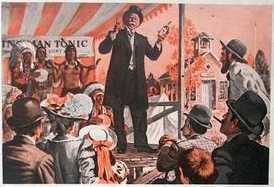
I see the practice in very simple terms: Marketing is about exchanging value through the use of "half-truths".


EXAMPLE: "The" customer is health conscious and knows "whole grain" bread is better for them, so:
Marketing is a loaf of bread label that says "made with whole grains" and has the                   American Heart Association seal of approval. Sounds healthy, right(?)...until you read the ingredients and see it is made with high fructose corn syrup, dextrose, and a load of preservatives.


In essence, our food industry markets or advertises what the consumer wants to see or hear.  They "market" half of the truth....the whole truth is right there on the label as well...in "itty bitty" small print.


http://www.angus.org/

Which, brings me to the selling of beef and the marketing juggernaut known as "Certified Angus Beef" or CAB for short.

Now, traditionally, beef has been sold in steakhouses and supermarkets based on USDA grading (Prime, Choice, Select, etc.); however, many restaurants and retailers have recently begun advertising beef on the strength of brand names and the reputation of a specific breed of cattle.

The American Angus Association set up the "certified Angus Beef" brand in 1978. The goal of this brand is to promote the idea that Angus beef is of higher quality than beef from other breeds of cattle. Cattle that are at least 51% black and exhibit Angus-type characteristics are eligible for "Certified Angus Beef" evaluation.

Before the advent of the Certified Angus Beef brand, beef was just, well, beef. The commodity was bought and sold, based on grade with little, if any, preference to breed. Branding was the sole province of the Swift, Armour, and Stanko meatpacking companies.

The CAB concept was revolutionary and changed everything. The American Angus Association took their message straight to the consumer and then "partnered" with the meatpackers to create the image that angus beef actually tasted better than other breeds. Today, Certified Angus Beef is the world’s largest branded beef program, commanding an eye popping 60% market share.

THE HALF-TRUTH
Wow! When the consumer buys a package of beef with the CAB label, they are getting pure angus meat, right? Originally that was true, but today, certified angus beef comes from an animal that has just 1/8 angus in its bloodline or breeding. It doesnt come from pure bred angus cattle... just an animal that has angus somewhere in its breeding. If certified angus beef came from 100% angus cattle there would not be enough to supply the demand, thats why it comes from an animal that is known to have angus in its breeding. Clever, huh(!)?


THE TRUTH
In the United States, the USDA operates a voluntary beef grading program. The meat processor pays for a trained USDA meat grader to grade whole carcasses at the abattoir. The grades are based on two main criteria: the degree of marbling (intramuscular fat) in the beef rib eye (at the 12th rib cross-section), and the age of the animal prior to slaughter. Most beef offered for sale in supermarkets and most restaurants is graded choice or select. Less than 3% of all beef gets the highest grade of Prime beef and the majority of that is sold to exclusive hotels and upscale restaurants.

The USDA Grade Inspector Does Not take into consideration what breed of cattle they are inspecting. In fact, they rarely know which breed they are grading!

So, kudos to the Angus Beef folks...masterful job of Selling the Sizzle! And, in all fairness, they do provide a quality product...but, so do the producers of non-Angus breeds.

POP QUIZ:

These two Ribeye Steaks are of equal grade...Can you tell which one is Certified Angus Beef? (Look closely for a clue in one of the pics)


FYI: USDA BEEF GRADES
USDA Prime — highest in intramuscular fat. (Currently, only three percent of the steaks sold are USDA certified Prime.)
Choice
Select — the leanest grade commonly sold
Standard
Commercial
Utility
Cutter
Canner
**Ground Beef is not Graded**


Sign That the Apocalypse is Upon Us:
The "Big Three" national hamburger chains, notorious buyers of the lowest quality beef, are now promoting (marketing) the addition of Angus Beef Hamburgers to their menus.


Wednesday, July 6, 2011

TEXAS DROUGHT THREATENS NATIONAL BEEF SUPPLY

AUTHOR'S NOTE - All of the premises presented in this series of posts are solely based on personal experience as a livestock producer and strictly as a cattleman (I have a basic understanding of farm commodities markets, but no real experience with such, and cannot speak with much authority from the farm side of things; Though I would think there are going to be some similarities). The information represents my opinion and is based on personal experiences. Any factual information may or may not be referenced, but be aware, the majority of the content is personal conjecture. Dialogue and comment are welcome.


Beef is the No.1 selling protein in the United States. Last year, consumer spending on beef totaled $74.3 billion. Per capita consumption of beef in 2010 was 59.6 pounds while per capita spending for beef was $240, according to industry research firm CattleFax.

 In the state that gave birth to the cowboy and spawned the culture of cattle drives, modern-day ranchers are fighting for survival. Severe drought (the worst in 44 years) and several million charred acres from wildfires have delivered a devastating "gut" punch, forcing ranchers to take drastic measures to save ranches across Texas. The state's livestock industry has lost $1.2 billion under withering conditions, according to the Texas Agrilife Extension Service, a service branch of Texas A&M University.

In Texas and other states with large cattle herds, the beef supply chain starts at the ranch. Ranchers own a herd of beef cows, each of which gives birth to a calf once a year. The mother nurses the calf and the pair graze on grass through the summer and into the fall, whereupon the fattened calf is sent to market.
This year, ranchers should be reaping the benefits of high prices, low supplies and high demand for their beef. The demand for calves from feedlots, where cattle add hundreds of pounds before slaughter, seems insatiable. Without rangelands full of nutritional forage, cows will struggle for nutrients. The herd will lose interest in breeding and cows may not provide enough milk for their calves, bringing the critical first step of America's beef cycle to a halt.

Among all meat production, beef producers typically incur some of the highest production costs. For example, costs for raising cattle are much higher than for poultry farming. Cattle producers pay more for each animal, grazing lands, fertilizers, feed and processing systems versus poultry farmers. Also the time it takes to prepare cattle for sale is much longer compared to other meats. It takes just 46 days for chicken to be market ready, but can take up to two years for beef.

Exacerbating the situation further is the shrinking number of cattle available for consumption. As beef producers struggle with the escalating drought, rising business costs, and mounting debt, more of them are selling their heifers for meat production, instead of breeding them to expand the herd. In Texas, the largest producer of cattle in the U.S., the "state herd" is down nearly 18% since 2008. In fact, ranchers and farmers across the country are shrinking their herd sizes bringing the nation's cattle herd count to it's lowest since 1958.


ADDING SALT TO THE WOUND:

The outlook for more rain looks grim. The National Weather Service's Climate Prediction Center forecast below-normal rainfall for Texas over the next month at least.


Thursday, June 16, 2011

CLARIFICATION of: A Knuckleball is a Curveball that Doesn't Give A Damn - Bob Ueker

CAUTION(!):  Unhinged RANT!!
This is more a "just venting" thing and will be poorly written and choppy in thought..at best.
________________________________________________________________________

I have had a sibling who has battled two forms of cancer for the past four years. One has required surgery, multiple radiation therapy, and two "full powered" chemotherapy treatments...only to see it coming back. The other is slow moving, weakens the bone mass to "peanut brittle", and is...incurable. Yet this bone cancer has brought all of the above treatments with it as well (Separate treatments for each form of cancer).

While the afflicted endure multiple types of treatments and high levels of pain, not to mention suffering.... Cancer also exerts high levels of stress, mental anguish, and, in some instances, pain to those "near and dear" to the patient. In addition, cancer treatments rack up financial bills that rival congressional spending...These bills are even higher if the patient does not have insurance.

So, you ask, what am I ranting about(?) Well...three separate myths that have persisted in our cultural thought throughout the past several decades.

MYTH 1: "Shucks, what a shame. He/she has cancer...unavoidable, I suppose."

WRONG! For at least the last 15 years, we have been inundated with science that tells us the many various ways/things we can do to lessen the risk or even avoid getting cancer. Yet, we collectively gorge on sodas, fast food, and highly processed foodstuffs all while addicted to tobacco products. It is all about choices. The choice between fresh produce, fruit, meats, etc, versus pre-packed, micro wave ready processed dinners. The choice between getting up and moving around and not just sitting in a recliner watching TV. The choice to choose a quality older age...to not be a burden to others OR YOURSELF.

Yes, I feel empathy and heartbreak for my sibling and the others that I see, but, 9 out of 10 could have either lessened the impact or avoided this illness altogether with some simple choices. ("There, I said it!")

MYTH 2: "Aren't we something? Thanks to the strides in modern technology and nutrition, we are living a lot longer than even a single generation ago!"

NO, not really. If it wasn't for the daily breakthroughs in modern medicine to COUNTERACT modern nutrition we would be dying sooner than our great grandfathers/mothers. (Just my opinion, no factual basis for this one)

MYTH 3: "We need Health Insurance for Everyone."

 Oh give me a freaking break(!). I have witnessed, first hand, what it means to not have health insurance. The dirty little secret "they" forgot about when Lawmakers passed "Obama Care" was a little publicized rule (Law?) that ALL hospitals follow in this country: A patient cannot be turned away from medical care because of inability to pay.  Let me repeat that...A patient cannot be turned away from medical care because of inability to pay....My aforementioned sibling, despite having been a medical professional for more than 25 years, had no health insurance (that is a sore subject for another rant). Despite the lack of insurance, they received quality care from competent doctors, got the latest drugs and therapy, and in a timely manner. All they had to do was sign a document that they would make a a small monthly payment to the hospital (the hospital eventually sells the debt to a collection service, who will make obnoxious attempts to collect, eventually collecting a profit by attaching to the patients estate upon their death)....Oh, and after racking up a SEVEN FIGURE bill, Medicaid swooped in and provided some relief on future treatment costs...because the "sib" qualified for disability...(heavy sigh)

Huh? Tell me again why I pay exorbitant premiums, as a self employed individual, to the health insurers (with exclusions, I might add)?? AND explain to me why "we" mortgaged the future on "Health Reform"??

Finally, I'll end with a true absurdity that any of you can witness at almost any super market, on almost any day....The grossly over weight man/woman, in the electric shopping cart, cruising the aisles while breathing pure oxygen through a nose tube (oxy tank between their feet), ......and, wait for it.......smoking a cigarette! (And if you look close enough, they probaly have a permanent medical port in their arm)...Ever wonder how a person can be breathing pure oxygen, while smoking a lit cigarette...without blowing up?

Tuesday, June 14, 2011

SHUT UP and EAT!

Time to Quit Complaining about Our Food and Do Some Healthy, Delicious Eating... Grab a Fork!


Grass Fed Burger Recipe
(From Cindy and Bob in Fort Worth)

Grass Fed burgers with red onions and mushrooms:
For two burgers:
 2 TBSP olive oil
 1/2 sweet red onion, sliced super thin
 1 portobello mushroom 1/4 inch slices
 1/2 cup good red wine ( pinot noir, merlot…you choose)
 ground pepper (lightly)
 Pinch of sea salt ( add after wine or mushrooms)
 
  Heat saute pan, add cool oil, when heated, saute
  onions 2-3 minutes. 
  Add mushrooms, cook additional 2 minutes. Add wine,
  pepper and salt to taste.
  Cook until wine is reduced.

  Ladle over Beef patty, on split grilled Kaiser roll.
 
 
 Cowboy Beef and Black Bean Chili. 
(Takes about 2 hours to prepare)

Ingredients:
2 pounds Grass-Fed ground beef
1 tablespoon vegetable oil
1-1/2 cups chopped onions
2 tablespoons minced garlic
2 medium yellow bell peppers, chopped
1 large jalapeƱo pepper, seeded, finely chopped
1/4 cup chili powder
1 tablespoon ground cumin
1 teaspoon dried oregano leaves, crushed
1 teaspoon dried thyme leaves, crushed
1/8 teaspoon ground red pepper
1 can (28 ounces) crushed tomatoes, undrained
1 can (14-1/2 ounces) chili-seasoned or zesty-style diced tomatoes, undrained
1 can (14 ounces) ready-to-serve beef broth
12 ounces dark beer
1/3 cup tomato paste
1 tablespoon honey
2 cans (15 ounces each) black beans, rinsed, drained
Chopped fresh cilantro (optional)
Instructions:
1. Brown ground beef in stockpot over medium heat 8 to10 minutes or until beef is no longer pink, breaking up into 3/4-inch crumbles. Remove from stockpot with slotted spoon. Set aside. Pour off drippings.
2. Heat oil in same stockpot over medium heat until hot. Add onions and garlic; cook and stir 3 to 5 minutes or until onions are tender. Add bell peppers and jalapeƱo; cook and stir 4 to 5 minutes or until peppers are tender.
3. Return beef crumbles to stockpot. Add chili powder, cumin, oregano, thyme and red pepper; cook and stir for 2 to 3 minutes. Stir in crushed tomatoes, diced tomatoes, broth, beer, tomato paste and honey; bring to a boil. Reduce heat; cover and simmer 45 minutes. Uncover stockpot; continue simmering 30 minutes or until thickened to desired consistency, stirring occasionally. Stir in beans; cook 5 to 10 minutes or until beans are heated through. Season with salt and black pepper, as desired. Garnish with cilantro, if desired.
Makes 8 servings.

TEXAS SALSA MEATLOAF
Ingredients
2 lbs. Grass-fed ground beef
¾ c. Italian seasoned bread crumbs
1 egg
1 tsp. kosher salt
½ tsp. black pepper
½ tsp. ground cumin
¾ c. salsa (your preference)
Directions:
Preheat oven to 325 degrees F.
Combine all ingredients by hand, mixing very thoroughly. If mixture seems too dry or crumbly, add more salsa to increase moisture.
Shape mixture into a loaf and place in glass baking pan. There should be no need for a loaf pan here, although you can use one if you’re a strict traditionalist.
Bake for approximately 90 minutes, until internal temperature reaches 160 degrees. Allow to rest for 20 minutes before carving.
Glaze (optional)
½ c. catsup
1 tsp. Worcestershire sauce
½ tsp. Tabasco (or other hot sauce)
1 tsp. ground cumin
1 ½ tbsp. Honey
Mix all ingredients together and baste loaf every 15 minutes after the first 10 minutes of cooking. Serve with extra glaze on the side for dipping and drizzling.

HOPE Y'all Enjoy!
 

Tuesday, December 21, 2010

CATTLE BARONS - TODAY

PART 2.2 of The Series: A LIVING WAGE FROM COMMERCIAL CATTLE
AUTHOR'S NOTE - All of the premises presented in this series of posts are solely based on personal experience as a livestock producer and strictly as a cattleman (I have a basic understanding of farm commodities markets, but no real experience with such, and cannot speak with much authority from the farm side of things; Though I would think there are going to be some similarities). The information represents my opinion and is based on personal experiences. Any factual information may or may not be referenced, but be aware, the majority of the content is personal conjecture. Dialogue and comment are welcome.


A cattle baron is a man who possesses great power or influence in the activity of herding/caring/selling of cattle. - Unknown

 The Civil War devastated economies in the South and in particular Texas. However, Texas had a distinctly singular and bountiful resource. Millions of longhorn cattle roamed wild across the state. Due to the ravages of the war and the steady stream of immigrants, beef was in heavy but short supply across the nation. To complicate matters further, Texas had plentiful supplies of beef but, no distribution system (railroads)...Kansas (three states and hundreds of miles away) had the rail heads to get the beef to market. 


In the late 1800's, some daring and intrepid cattlemen rounded up longhorns by the millions and herded them north across Texas, Oklahoma, and into Kansas. In doing so they gave rise to two, distinctly American, icons: the Cowboy and the Cattle Drive.

"Driving Cattle circa 1887
(John Grabill)
In less than two decades, following the Civil War, great herds of these longhorn cattle were rounded up and driven north to the rail heads in Kansas. These wild and unpredictable bovines were only worth about a dollar a head in Texas, but upon arrival to the shipping points in Abilene, Dodge City and Wichita, a single longhorn could fetch as much as forty dollars. More than six million longhorns made the three-month trek north. Often referred to as the greatest migration of livestock in the history of the world, cattle drives and the cowboy became living legend. 

Ranch Brands on Marker
 Doan's Crossing, Texas
Learn More
The moving of several thousand wild head of cattle, at one time, over five hundred miles of rugged prairies, encounters with murderous outlaws, and hostile indians brought fame and fortune to a select few. Men such as Charles Goodnight, Oliver Loving, John T. Lytle, the Blocker brothers, and a host of others took enormous financial as well as personal risk (Loving was killed in an Indian attack while leading a cattle drive) to reap the considerable rewards. 


Legendary ranches were born as well. 

The Y.O., XIT, JA, King Ranch, 6666, Waggoner, and Matador Land and Cattle were among the largest providers of cattle at that time (Side Note: With the exception of the Matador, all of the above named are still active cattle ranches today). These men were literally "Barons of the U.S. Cattle Market" and wielded considerable influence in the pricing of beef.

That was then...This is now.  

The open range became fenced pasture land. Cattle are now "driven" to market in eighteen wheelers via a modern highway system. Charles Goodnight, Oliver Loving, the XIT, and 6666 no longer influence the pricing of beef. In fact they are now merely characters and entities of a romantic and colorful past...just "history"as they say.

"Driving Cattle" - Modern Day
Today there are only four "cattle barons". Their decidedly unromantic names are Swift, Cargill, National Beef, and Tyson. These conglomerates are well financed, ruthless buyers of beef "on-the-hoof". Together they control and process 69% of the beef produced in the United States. In doing so, these "Big Four" heavily influence the price of live cattle.


LITTLE KNOWN FACT:
Many of the cattle drives were "staffed" by cowboys between the ages of 15 to 20. There was such a shortage of labor that many of the "cowboys" were actually...cowGIRLS. Many of whom cut their hair and made themselves appear as boys to get a job that was dirty, physically exhausting, and paid about a $1.00 per day. 


To learn more about the considerable influence and heroism of women in the American West visit the National Cowgirl Museum and Hall of Fame in Fort Worth.  Learn More Here


PART 3: A Living Wage From Commercial Cattle: What Goes Up...

Thursday, December 9, 2010

LIFE AT THE "CRAPS TABLE"

PART 2.1 - of The Series: A LIVING WAGE FROM COMMERCIAL CATTLE


AUTHOR'S NOTE - All of the premises presented in this series of posts are solely based on personal experience as a livestock producer and strictly as a cattleman (I have a basic understanding of farm commodities markets, but no real experience with such, and cannot speak with much authority from the farm side of things; Though I would think there are going to be some similarities). The information represents my opinion and is based on personal experiences. Any factual information may or may not be referenced, but be aware, the majority of the content is personal conjecture. Dialogue and comment are welcome.


"When you are ranching and farming, you have to take what the buyer offers." (John Hodges)

Few people are formally trained in the study of economics, but everyone makes economic decisions.
Any attempt by an individual to earn or spend money involves economic decision making. Earning and
spending or buying and selling influence the way our economy functions. It is this economic influence that also makes the cattle market move each day by establishing prices for cattle and putting beef on the consumers’ table.

Economics is also thought to be a mathematical science by many people since economists are
constantly working with numbers trying to predict the outcome of some economic event. Actually, economics is the study of human behavior. Economists try to relate how people will react to changes in supply and demand, to higher or lower interest rates or to increases in the cost of production.

Beef cattle marketing is also a study of human behavior. Cattle prices are determined by how much beef people choose to buy and sell in the market place. If people want to buy more beef than is available in the marketing channel, then the price of beef is bid up rationing the beef among buyers. If producers need to sell more beef than people are willing to buy, then the price of beef will be forced downward to move the excess supply.

Cattle producers often say that to make money in this industry you must buy low and sell high, but that only works when the individual who is selling has some way of influencing the price. Since the overwhelming majority of beef is sold via auction, the price the individual producer receives is thus dictated by commission agents (Buyers) representing the interests of large feedlots and/or beef processors. Which means they will try to buy at the lowest price possible....

We learned (above) that economics is based on human behavior and the supply/demand function of pricing. So, a producer could just hold his/her cattle until demand is high and thus improve the price...simple, right? Uh...no. The cattle being sold today will not be available to the consumer for 6-12 months. The price received today is based on a "best guess" of what consumer demand will be at a future date...which means the "buyer" will hedge the price against unknown factors...thus, no matter what the individual producer does, the selling of cattle in the auction process is nothing more than a "roll of the dice".

PART 2.2: A Living Wage From Commercial Cattle: Cattle Barons - Today

Wednesday, December 8, 2010

Sometimes, life just seems to make sure you are doing the things that you should be doing...

These past few months have been spent tending to "family"


New postings 
coming SOON!

Sunday, February 14, 2010

UNDERSTANDING CATTLE MARKETING


PART 1 of The Series: A LIVING WAGE FROM COMMERCIAL CATTLE
AUTHOR'S NOTE - All of the premises presented in this series of posts are solely based on personal experience as a livestock producer and strictly as a cattleman (I have a basic understanding of farm commodities markets, but no real experience with such, and cannot speak with much authority from the farm side of things; Though I would think there are going to be some similarities). The information represents my opinion and is based on personal experiences. Any factual information may or may not be referenced, but be aware, the majority of the content is personal conjecture. Dialogue and comment are welcome.

 "A cattle auction is a place where honorable men try to swindle each other out of their herd." (an observation from my late Grandfather, who was an agricultural commodities buyer)


 An Introduction to the Various Methods for Selling Cattle

The marketing of livestock in the United States is conducted by a variety of businesses and individuals. The participants range from the order buyer who operates out of the seat of a pickup truck, cattle "buying stations" or "auction barns", and now video auctions that sell cattle via satellite television. The livestock marketing business has changed dramatically from the days when stock producers would send their livestock to a terminal market and totally blind of the price they might receive for their stock. Terminal markets and commission agents are still major players, but they now compete with modern day merchants who use computers, video broadcasts, fax machines, and cellular phones to market livestock. The current participants involved in the wholesale marketing of cattle include such diverse operations as feedlots, auction barns, order buyers, dealers, brokers, and video auction companies.

TERMINAL MARKETS and COMMISSION AGENTS

The term "Terminal Market" comes from the days when cattle were taken to the nearest train stop, or terminal, via trail drives and later by truck. Terminal markets usually provided a large area of livestock pens, also known as stockyards. The large meat packing firms would have buyers present to purchase the "meat on the hoof" and then arrange to ship the animals by train to the packing plants located in large metropolitan areas "back east."

 The use of commission agents dates back to the early days of trail drives when ranchers would send their livestock to an agent located at any of the larger stockyards, such as those located in  Chicago, Kansas City, and Fort Worth. These agents would then be responsible for the care and feeding of the livestock and the selling of them once they reached the yard. The agent was paid a commission, by the cattleman, based on how much the animals brought at market.

The Auction Barn
Livestock are consigned to auctions by ranchers, to be sold by an auctioneer. Because transprtation is a major expense, most often the producer will send their livestock to the nearest auction market. These auction markets are usually individually owned, though a few are owned by large food conglomerates. The owner of the auction receives a commission or a per head fee for selling the livestock in addition to charging for the feed consumed while the livestock are in the auction yard. 

In an auction livestock are typically sold by the pound except in the case of animals being sold strictly for breeding. Breed stock are usually sold by the individual head. For example, a breeding bull may bring as much as $2500 or more, whereas a steer destined for the feedlot is sold by weight "on the hoof". Simply put, a buyer  purchases the animal by the pound.

Sitting in the auction arena are the" buyers". They make their living attending  auction sales throughout the week. They may be order buyers working for  a single rancher or a buying syndicate, or they may be employees of a feedlot or a packing house. Order buyers are very knowledgeable and highly skilled at what they do. They are paid on a commission basis, and are responsible for purchasing hundreds (sometimes thousands) of head of cattle each week.


CUSTOM FEEDERS
A growing trend in the beef business in the last 30 years is the custom feeding of cattle. This means that a rancher contracts to have his cattle placed in a feedlot. He then pays for daily feed and yardage (cost of using the facilities) expenses. He then sells the cattle to a packer when they reach the weight required for processing. This method allows the rancher to retain ownership of the cattle all the way through the feeding phase. The cattle are then sold on the projected grade of the beef as well as on a weight basis. Simply put, the price per pound is determined by the expected quality of the meat.

PRIVATE TREATY SALES 
Some cattle producers like to sell their livestock through private treaty or "in the country," which simply means that buyers come to the ranch or farm to purchase the animals directly from the owner rather than from an auction market. 


SATELLITE VIDEO AUCTIONS
This relatively new tool allows cattlemen to offer their livestock for sale to buyers all over the country through the use satellite television technology. A video of a group of cattle pictures of  a particular
ranch's consignments of livestock are broadcast on the scheduled day, and buyers can view the livestock on their  television, via a broadcast subscription service. While they are viewing the livestock, they can make bids by telephone or internet to purchase cattle through this high tech version of an auction.  


PART 2: A Living Wage From Commercial Cattle
Life at the "Craps Table".


Sunday, February 7, 2010

"I taut I taw a Puddy Tat" (Introduction to a New Series of Posts)

Smokey is going "Unplugged"
This blog is tweaking its focus to the food industry, food politics, and sustainable food marketing (though he will still include healthy eating and "buy local" articles as well). In essence, Smokey is going to give his opinions on both "what is right and wrong" with our current food production system. In addition, he will offer his thoughts and ideas for possible solutions.

"In the cattle auction market, it sometimes seems, you have about as much chance of making a living buying and selling cattle as you do surviving a gun fight while holding a knife." (overheard in a discussion between two old ranchers watching their cattle go through the auction ring)


Tweety Bird and Sylvester The Cat are famous cartoon adversaries. In our society they represent the predator (Sylvester) and the prey (Tweety Bird). In real life, the predator will use  cunning and brute force to conquer it's prey. In the Loony Tunes version Tweety represents the underdog. Despite this perceived disadvantage, he consistently reverses their traditional roles by being nimble, thinking ahead, and able to adjust quickly to the situation. Meanwhile the cat is tunnel visioned and slow to adjust. In a sense, this seemingly silly cartoon is a metaphor for the current agricultural commodity system and, perhaps, presents lessons the agricultural community can learn from.

We, as agricultural professionals, ply our trade in a nation founded on and based upon the free market system. But, in its present form the livestock market presents itself as a formidable conundrum within the free market. In the arena of livestock marketing there are two main players. The producer and the buyer. My particular interest lies with a producer with less than 200 head of "mama cows" and how he/she is to survive in the current system as it exists today. My premise is simple, the cattleman is viewed as prey and the buyer as predator. I know, this may seem a little outlandish, after all the current system provides an auction/bid system where every producer has an outlet and equal opportunity to sell their animals. The system though, is set so as to allow the producer no control over the price he/she will receive and really no reliable way of accurately projecting a true profit/loss scenario BEFORE selling the livestock.

In a free market system, a manufacturer offers their "widget" at a wholesale price that They Set. Any adjustments to the price are made by the manufacturer in order to entice the potential buyer and still make a profit (or at least break even). A cattle producer is also a manufacturer...calves, the essential. ingredient to making beef...except he/she does not set their own wholesale price. Instead, they produce the product, with all it's inherent "production costs", and enter into a buying system with no idea on whether they will get those costs back, much less make a profit.

In the coming posts, I will discuss:
  •  Who and what a commercial cattle buyer is and how they set their price
  •  The economics to the producer and how this affects the consumer
  •  Discuss the "SOLE" movement and how it's principles may improve the quality of life for both producers and consumers
  • Redirecting "Political dollars" to the community and the sustainable economic impact these dollars would create
In the end, I hope to show why we all must become "Tweety" in order to create a sustainable, healthy, and economically viable food system.

Author's Note: All of the premises presented in this series of posts are solely based on personal experience as a livestock producer and strictly as a cattleman (I have a basic understanding of farm commodities markets, but no real experience with such, and cannot speak with much authority from the farm side of things)(Though I would think there are going to be some similarities). The information represents my opinion and are based on personal experiences. Any factual information will be "backed up" with references when possible, but be aware, the majority of the content is personal conjecture.
.

Wednesday, February 3, 2010

The DEVIL'S ANGELS

WARNING! A Smokey "self indulgent pontification!"
The USDA is a large, unwieldy, bureaucratic, political devil, but,"it's" local public servants can be down right Angels.

I frequently complain about and criticize the United States Department of Agriculture (USDA). It is a politicized, bureaucratic, and often serpentine mess. Yes, the Washington based political wonks that manage this behemoth are often nothing short of idiots. But, I would like for us to take a step back, look out the window, far beyond the carpet lined office, and tell you about the oft forgotten men and women who work for the various agencies and departments of the USDA.

You see, once upon a time, the USDA was not only a proponent of the farm, but a valued source for methodology, economics, and stewardship. The "County Agent" was a member of the community, valued for his or her knowledge, ready to provide advice and education on planting, water resource
management, production, conservation or any manner of innumerable subjects. In recent times, they
have faded from the conscious of many. The bureaucratic "red tape", political wheeling, and, to some degree, the USDA's loss of mission has cast a pall that sometimes casts a shadow on these agents. AND too often, they themselves are ignored or forgotten by "the parent".

I recently attended a major national event by the Grazing Lands Conservation Initiative (GLCI). The theme of the conference was "To heighten awareness of the economic and environmental effects of grazing lands". I went to this event with quite a bit of skepticism because the main sponsors were the various departments of the USDA and from the Department of the Interior (DOI). "Probably a grand propaganda event" I was thinking. Boy was I wrong!

The GLCI event was four action packed days of learning sessions, break out groups, and totally geared toward sustainable livestock management. Most of the speakers were the aforementioned "County Agents" and do they know "their stuff". I came away impressed with not only their scientific knowledge, but also with the depth of their "on the ground" experience. As the old saying goes: "they all had dirty fingernails". There was not a single policy or political wonk to be found. In fact, most of the attendees were equally divided between these government employees and individual ranchers like myself. Everyone, and I mean everyone, in attendance had one goal in mind, sustainability. (Ok, enough of the conference stuff...visit the GLCI site if you want to learn more.)

My real point is as follows. In getting our family ranch re-started I have pestered and cajoled my local USDA agents mercilessly. In every instance, they have responded professionally, timely, and courteously. In fact they have "bent over backwards" to help, provide assistance, or get the information I needed. Representatives of the NRCS, SRM, and ARS have not only provided information, but have personally visited the ranch to inspect and gather information...to help ME. These men and women have taken soil and water samples, surveyed and measured, and provided detailed recommendations. They then call regularly to see how things are going or if I have any new issues. Whenever we have had a success, they were right there celebrating with me and when things haven't gone as planned, they said "let me make some calls and I will get back to you with a possible solution"...and they did. For all of this I have paid...NOTHING!(if you don't count my income taxes):)

I thought I was just lucky that my county had some out of the ordinary USDA folks. The GLCI conference opened my eyes. I quickly learned that no matter where you are from, these "boots on the ground" professionals all have the same mission...to help and serve the individual

So, while I do not trust or respect the USDA as policy friendly toward the "little guy", I do trust my local County Agents. When it comes to actually caring about the success of the local farmer or rancher, these men and women are absolute ANGELS.

More Info:
"HOPE on the RANGE Video
By SRM (Society for Range Management)

Photos courtesy of NRCS
.
.

Tuesday, February 2, 2010

I'd Like to Buy the World A...Glucose Meter

The 1971 Soda Pop commercial filled our hearts with love and made the makers of diabetic supplies rich.

So, what are you drinking right now? Did you know that recent studies show that the average person drinks 50 gallons of soda a year? That is a little more than 533 twelve ounce cans per year and comes out to a daily average of nearly 18 ounces per day. Soft drinks are one of the largest single sources of calories in the diet of every American accounting for up to 7 percent and for teenagers, even higher at approximately 13%. What does this mean? To put into perspective, these numbers reflect roughly 60,000 EMPTY calories per year...calories that provide little or no nutritional value, but are often stored as sugars in our bodies.

Soda is one of the largest contributors of caloric intake in society today. As we all know, extra calories mean extra weight and that leads to health problems. Problems related to the heart, tooth decay, and Type 2 Diabetes (formerly called "Adult Onset").

OK, so nobody ever said that soft drinks were a health food. But a highly debated 2004 Harvard study concluded that in addition to the bad things we already know about sodas, they may be directly contributing to the nation's increase in diabetes. Since 1980, the incidence of type-2 diabetes has more than doubled  according to the federal Centers for Disease Control and Prevention, and now represents about 6% of the total population. AND,  about the majority of that increase has come in just the last 10 years.

No one is saying that our thirst for the carbonated "sugar shots" are the sole cause of the nation's growing number of jello butts and spare tire bellies. But, it is hard not to correlate the huge increase in diabetic incidence to the rise in obesity.

The bottom line here is that you need to analyze everything you eat and drink. You do not have to give up sodas entirely, but enjoy them responsibly and save them as a rare treat...as they were originally intended.

SOME EXTRA INFO ON SODAS, OBESITY, and DIABETES:
Diet Sodas Linked with Health Risks  

Zero calories, same great taste (and heart risks)

And a Companion Piece from the Wellness Tips Blog
Diet Intervention for Overweight and Obese Kids 
.
.